3 min read
What should a good management system for a clothing store include?
The features worth evaluating before choosing software to run a clothing store.
Published on 2026-08-12 · Updated on 2026-08-13
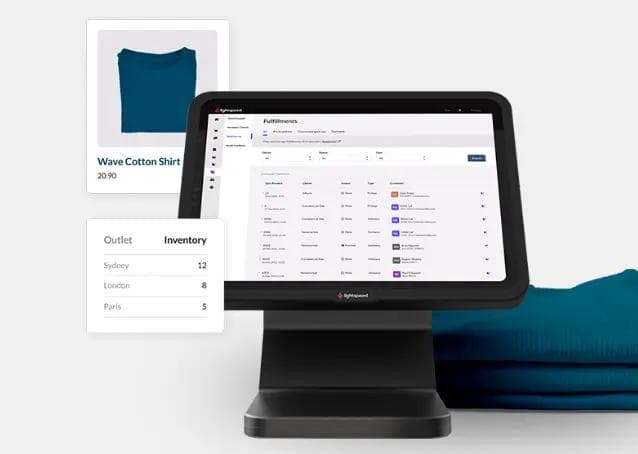
A good management system for a clothing store should bring together sales, the register, inventory by size and colour, electronic invoicing and an online store. The point isn't to stack up isolated tools, but to work from consistent information so you can serve customers better, avoid inventory mistakes and make decisions about the business.
What should a system for a clothing store solve?
A clothing store deals with sizes, colours, variants, seasons, promotions, exchanges and several sales channels. That's why a management system for a clothing store should support the entire operation, not just print a receipt.
Before signing up for software, it's worth checking whether it solves the shop's day-to-day problems and whether it can grow alongside the business.
How does inventory by size and colour work?
Generic inventory isn't enough for apparel. A t-shirt can come in five sizes and six colours: knowing there are thirty units in total doesn't help — you need to know exactly which variant is available.
Antonia POS lets you organise products and their variants so you can check availability precisely at the moment of sale.
How does it speed up in-store sales?
A POS system should make it easy to find products, scan barcodes, pick variants, take different payment methods and open and close the register. The fewer steps at the counter, the smoother the service.
A terminal designed for apparel helps the team work without leaning on spreadsheets or separate processes.
How does it handle electronic invoicing?
In Argentina, electronic invoicing is part of daily operations. A complete system should be able to issue A, B and C invoices, credit and debit notes, and work with ARCA without entering the same data somewhere else.
That integration reduces errors and removes the need to copy sale data from the register into a separate invoicing tool.
How does the online store connect to the shop?
The problem isn't just having an online store: it's keeping the shop and the eCommerce in step. If a size M jacket sells at the counter and the store still shows one unit available, the business can end up overselling.
With Antonia POS, point-of-sale transactions update online availability. That way you can sell online and in store from a shared inventory base.
Customer management and team operations
Order history, returns, roles and permissions all help bring order to the operation. Not everyone needs access to the same information: an operator can focus on the register while a manager reviews inventory and reports.
These features become especially useful once the shop adds staff or more than one sales channel.
POS, ERP or invoicing tool — which one?
It depends on the scope the business needs. An invoicing tool handles tax documents; a POS organises sales and the register; a management system integrates products, inventory, customers, reports and channels.
For a deeper look at that difference, read POS, invoicing tool or management system: what does a clothing store need?.
What to check before choosing software
Look for a solution that reflects how your shop actually works, that lets you control variants, and that doesn't force you to duplicate data across the register, inventory and eCommerce.
If you want to evaluate clothing store POS software that brings these features together, take a look at Antonia POS.